Question 426Electricity & Electronics - QMED
70% to passIn actual applications, electrical connections associated with 'R1, R2 and R3' of the transmitter to 'R1, R2, and R3' of the indicators shown in figure "C" of the illustration are made by what means? Illustration EL-0092
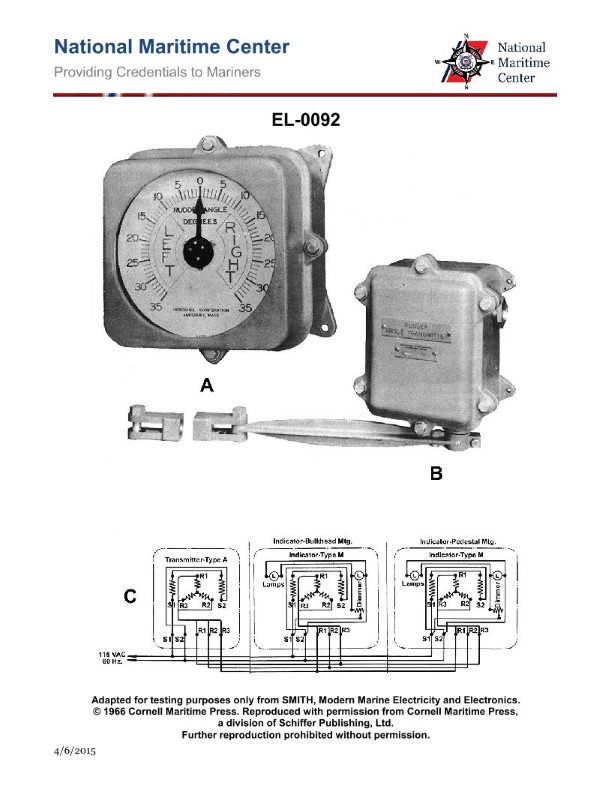
The correct answer is A) slip rings and brushes. Electrical connections associated with 'R1, R2 and R3' of the transmitter to 'R1, R2, and R3' of the indicators are typically made using slip rings and brushes. This allows for the continuous transmission of electrical signals between the rotating transmitter and the stationary indicators without the need for physical connections that could wear out or become disconnected over time. The use of slip rings and brushes is a standard practice for this type of electrical configuration. The other answer choices are incorrect because: B) spliced and taped connections would not provide a reliable continuous connection for a rotating system, C) soldered contacts would be difficult to implement and could break over time, and D) solderless crimp-on connectors are not typically used for this application.
Ready to test your knowledge?
Take a Electricity & Electronics - QMED Practice Exam