Question 223 Rules of the Road
90% to passBOTH INTERNATIONAL & INLAND Vessel "A" and vessel "B" (which is pushing ahead) are meeting head-on as shown in illustration D008RR below. How must the vessels pass?
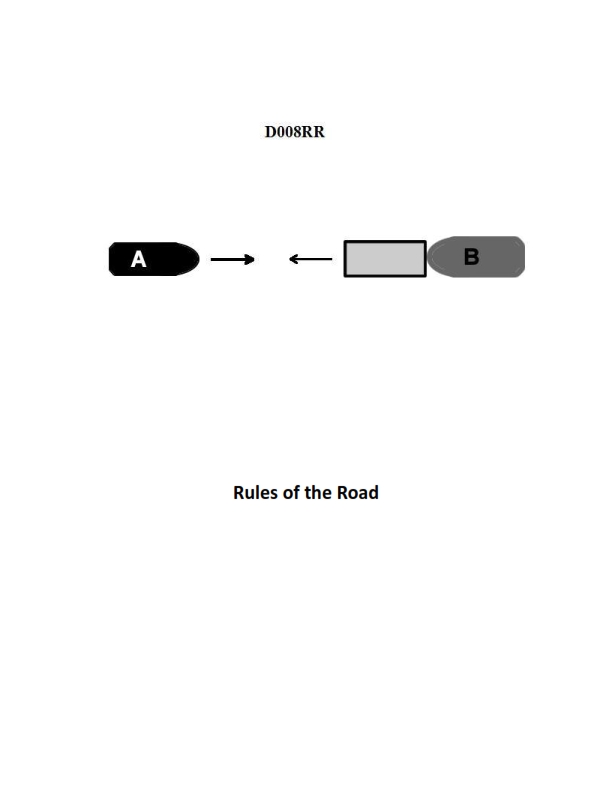
The correct answer is B) Both vessels should alter course to starboard and pass port to port. This is the correct answer because under the International Regulations for Preventing Collisions at Sea (COLREGS), when two power-driven vessels are meeting head-on, they must both alter course to starboard to pass port-to-port. This is the standard crossing situation in the COLREGS and applies to both international and inland waters. The other answer choices are incorrect because: A) Altering only one vessel's course is not the correct action for a head-on meeting situation. C) Passing starboard-to-starboard would be incorrect for a head-on meeting. D) Exchanging whistle signals is not necessary, as the COLREGS clearly dictate the required action for a head-on meeting.
Ready to test your knowledge?
Take a Rules of the Road Practice ExamPass Your Coast Guard Licensing Exams!
Study offline, track your progress, and simulate real exams with the Coast Guard Exams app