Question 273 Rules of the Road
90% to passBOTH INTERNATIONAL & INLAND You are aboard vessel "A" , a power-driven vessel, on open waters and vessel "B", a sailing vessel, is sighted off your port bow as shown in illustration D027RR below. Which vessel is the stand-on vessel?
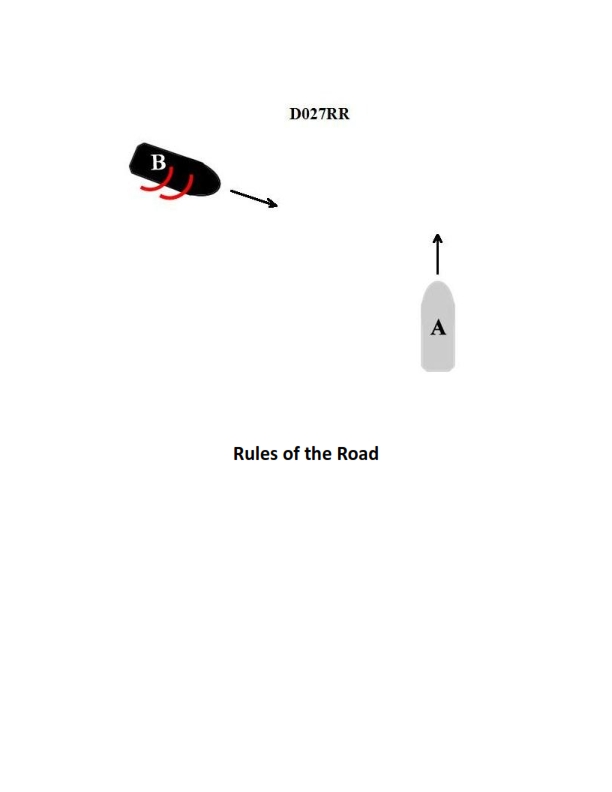
The correct answer is C) Vessel "B" because it is sailing. According to the International Regulations for Preventing Collisions at Sea (COLREGS), a sailing vessel is the stand-on vessel when it is in a crossing situation with a power-driven vessel. This is because sailing vessels have less ability to maneuver quickly compared to power-driven vessels. Therefore, in the given scenario, vessel "B", the sailing vessel, is the stand-on vessel and must maintain its course and speed, while vessel "A", the power-driven vessel, must take early and substantial action to avoid a collision. The other options are incorrect because the relative positions of the vessels (option A) and the fact that vessel "A" is towing (option D) are not the determining factors in this crossing situation. The key factor is that vessel "B" is a sailing vessel, which makes it the stand-on vessel according to the COLREGS.
Ready to test your knowledge?
Take a Rules of the Road Practice ExamPass Your Coast Guard Licensing Exams!
Study offline, track your progress, and simulate real exams with the Coast Guard Exams app