Question 51Rules of the Road90% to pass
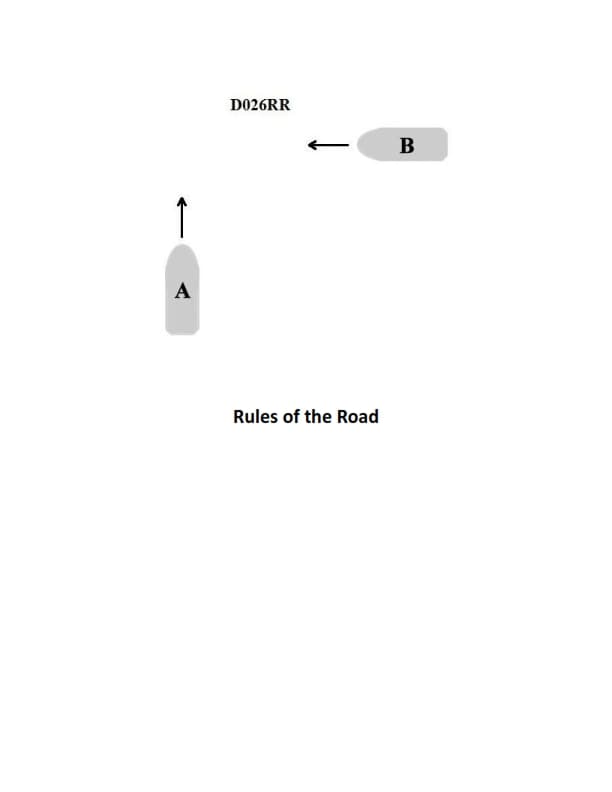
BOTH INTERNATIONAL & INLAND Vessels "A" and "B" are crossing as shown in illustration D026RR below. Which statement is TRUE?
AI Explanation
The correct answer is A) Vessel "A" must keep clear of vessel "B".
The International Regulations for Preventing Collisions at Sea (COLREGS) state that when two power-driven vessels are crossing, the vessel that has the other on her own starboard side must keep out of the way of the other vessel. In the illustration, vessel "A" has vessel "B" on her own starboard side, so vessel "A" must keep clear of vessel "B".
The other options are incorrect because: B) The vessels should not pass starboard to starboard, as that would violate the COLREGS rule on crossing vessels. C) Vessel "B" should not alter course to the right, as that would also violate the COLREGS rule. D) Vessel "B" should not pass under the stern of vessel "A", as that would not be the proper action for the give-way vessel (vessel "A") to take.
Related Questions
#49 BOTH INTERNATIONAL & INLAND When does the rule regarding look-outs apply? #50 INLAND ONLY While underway and in sight of another power-driven vessel forward of your beam, more than 0.5 mile away, you put your engines full speed astern. Which statement concerning whistle signals is TRUE? #52 INLAND ONLY What must a partially submerged object towed by a vessel show during the day? #53 BOTH INTERNATIONAL & INLAND When navigating in thick fog with the radar on, which action should you take? #54 BOTH INTERNATIONAL & INLAND You are in charge of a stand-on vessel in a crossing situation. The other vessel is 1.5 miles to port and you believe that risk of collision exists. What action should you take?