Question 63Rules of the Road90% to pass
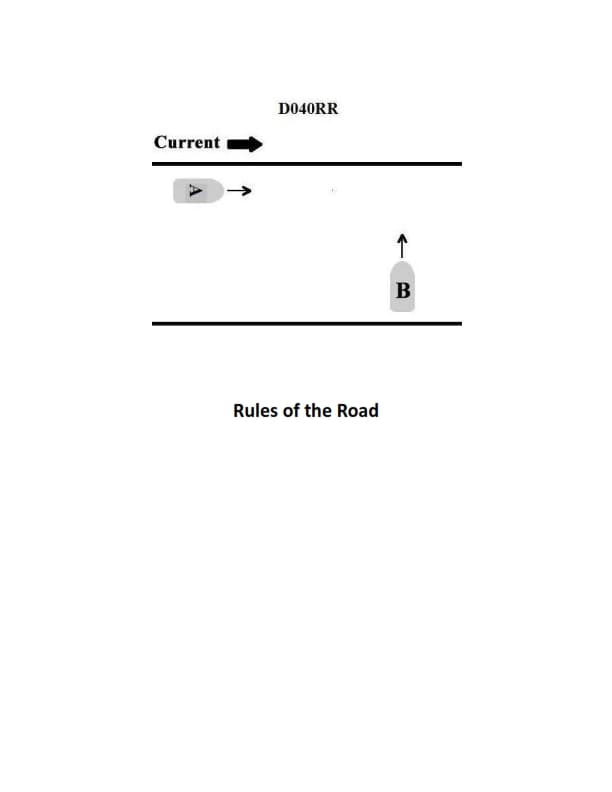
BOTH INTERNATIONAL & INLAND You are crossing a narrow channel on your 15meter vessel. A deeply loaded cargo vessel is proceeding down the channel as shown in illustration D040RR below. In this situation, which statement is correct?
AI Explanation
The correct answer is D) You cannot impede the passage of the cargo vessel.
This is because in a narrow channel, the larger, less maneuverable vessel (the cargo vessel) is the stand-on vessel, and the smaller vessel (your 15-meter vessel) must avoid impeding the passage of the cargo vessel. This is a general principle of the Navigation Rules, which states that a vessel must not impede the safe passage of a vessel that can safely navigate only within a narrow channel or fairway.
The other options are incorrect because: A) the size of the vessel does not determine the stand-on vessel in a narrow channel scenario; B) the direction of the current does not determine the stand-on vessel; and C) the Rule of Special Circumstances does not apply in this straightforward narrow channel situation.
Related Questions
#61 INTERNATIONAL ONLY You are on a vessel that cannot comply with the spacing requirement for masthead lights. What is required in this situation? #62 INLAND ONLY The special light for a vessel engaged in public safety activities must meet which of the following requirements? #64 BOTH INTERNATIONAL & INLAND You are approaching another vessel on crossing courses. She is about one mile distant and is on your starboard bow. You believe she will cross ahead of you but she sounds a whistle signal of five short blasts. Which action should you take? #65 INTERNATIONAL ONLY You are approaching another vessel and will pass starboard to starboard without danger if no course changes are made. What action should you take? #66 INLAND ONLY You are overtaking another power-driven vessel in a narrow channel, and you wish to overtake on the other vessel's port side. What whistle signal would you sound?