Question 890Rules of the Road90% to pass
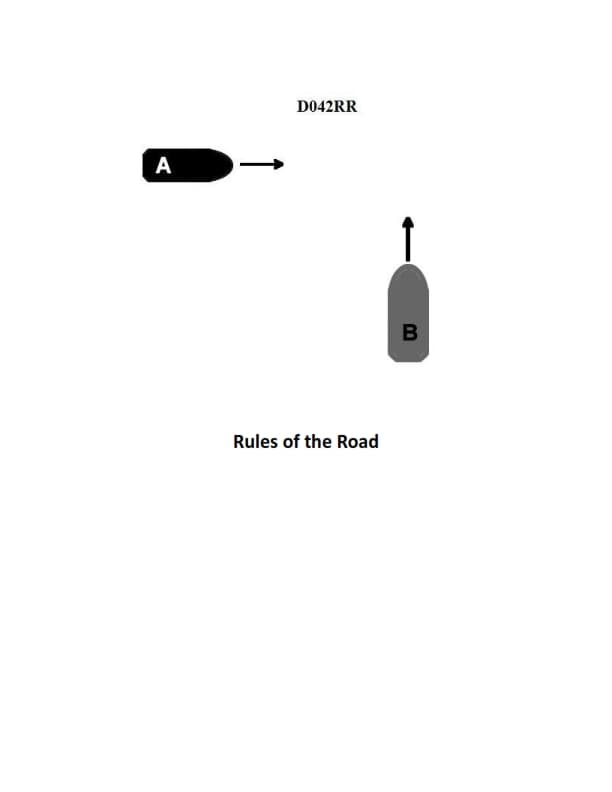
BOTH INTERNATIONAL & INLAND Two power-driven vessels are crossing as shown in illustration D042RR below. Vessel "A" sounds three short blasts on the whistle. What is the meaning of this signal?
AI Explanation
The correct answer is A) Vessel "A" is backing engines.
The International Regulations for Preventing Collisions at Sea (COLREGS) state that a vessel backing engines is required to sound three short blasts on the whistle. This signal indicates that the vessel is going astern, which can help inform the other vessel of its maneuvering intentions.
The other options are incorrect because B) holding course and speed would not require a whistle signal, C) the danger signal is five or more short blasts, and D) crossing ahead of the other vessel would typically be signaled with one prolonged blast followed by two short blasts.
Related Questions
#888 BOTH INTERNATIONAL & INLAND You are the stand-on vessel in a crossing situation. Which signal should you sound if you think the give-way vessel is NOT taking sufficient action to avoid collision? #889 BOTH INTERNATIONAL & INLAND You are underway in a narrow channel and are being overtaken by a vessel astern. The overtaking vessel sounds a signal indicating her intention to pass you on your starboard side. If such an action appears dangerous, which signal are you required to sound? #891 BOTH INTERNATIONAL & INLAND You are approaching another vessel on crossing courses. She is approximately half a mile distant and is presently on your starboard bow. You believe she will cross ahead of you. She then sounds a whistle signal of five short blasts. Which action should you take? #892 BOTH INTERNATIONAL & INLAND You are underway and approaching a bend in the channel where vessels approaching from the opposite direction cannot be seen. Which signal are you required to sound? #893 BOTH INTERNATIONAL & INLAND Which statement is TRUE concerning the danger signal?