Question 99Rules of the Road90% to pass
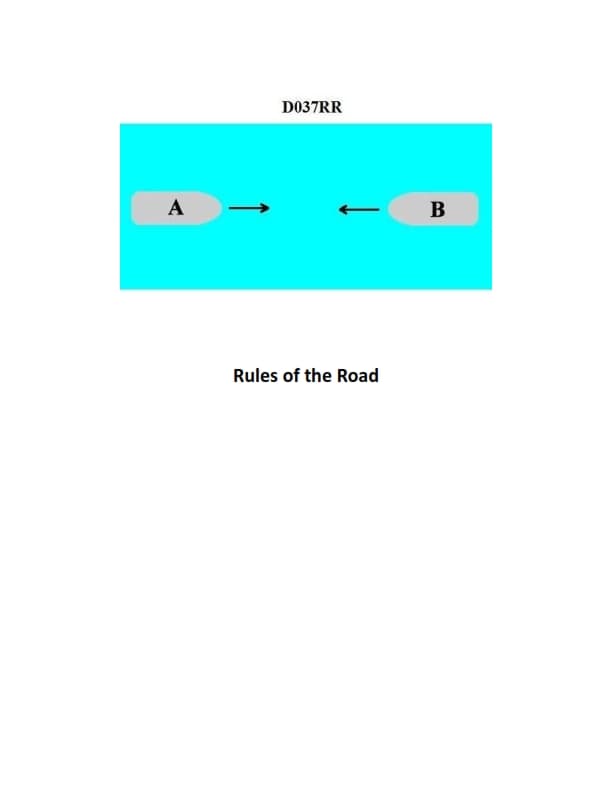
BOTH INTERNATIONAL & INLAND Two vessels are meeting in a narrow channel as shown in illustration D037RR below. Vessel "A" is a sailing vessel. Vessel "B" is a power-driven vessel which can safely navigate only within the channel. Vessel "B" sounds the danger signal. Vessel "A" shall take what action?
AI Explanation
The correct answer is C) not impede the passage of vessel "B".
In this scenario, vessel "B" is a power-driven vessel that can only safely navigate within the narrow channel. The International Regulations for Preventing Collisions at Sea (COLREGS) state that a sailing vessel (vessel "A") must not impede the safe passage of a power-driven vessel (vessel "B") in a narrow channel. Vessel "B" has sounded the danger signal, indicating it is in a constrained situation and requires the sailing vessel to take action to avoid impeding its passage.
The other answer choices are incorrect because: A) sounding the danger signal is the responsibility of vessel "B", not vessel "A"; B) the sailing vessel does not have the right of way in this situation; and D) maintaining course and speed would impede the passage of vessel "B", which is not allowed.
Related Questions
#97 BOTH INTERNATIONAL & INLAND Risk of collision may exist __________. #98 BOTH INTERNATIONAL & INLAND You are underway in thick fog. You have not determined if risk of collision exists. Which statement is TRUE? #100 BOTH INTERNATIONAL & INLAND A power-driven vessel underway shall keep out of the way of which vessels? #101 BOTH INTERNATIONAL & INLAND You are approaching another vessel and are not sure whether danger of collision exists. What must you assume? #102 BOTH INTERNATIONAL & INLAND In which situation does a risk of collision exists?