Question 128Safety & Environmental - 1st Asst/Chief70% to pass
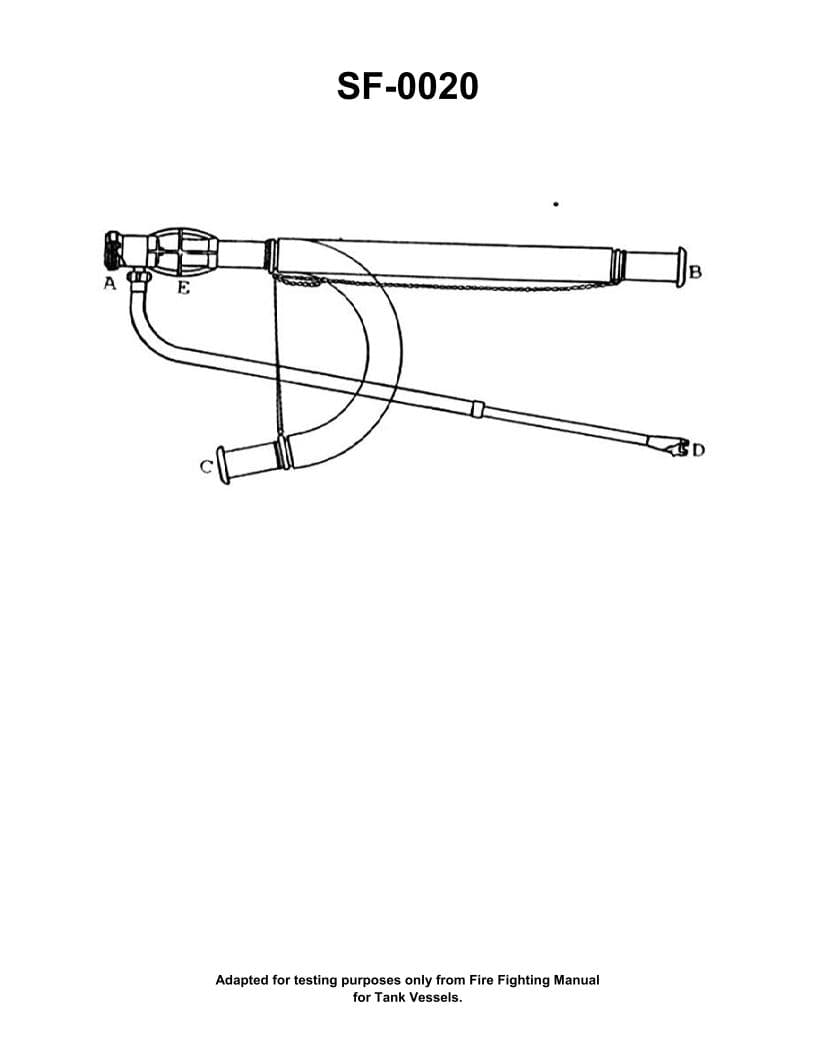
As the senior engineer onboard a vessel, how would you instruct a new engineer to use the firefighting apparatus illustrated to fight an oil fire at the bunker station? Illustration SF-0020
AI Explanation
The correct answer is B) Direct aqueous film forming foam off the overhead or nearby bulkhead, using a bank down or bounce off method to extinguish the oil fire.
This is the correct answer because aqueous film forming foam (AFFF) is the most effective agent for extinguishing an oil fire. AFFF forms a vapor-suppressing film on the surface of the burning liquid, smothering the fire. Applying the AFFF by bouncing it off a nearby surface allows the foam to spread over the oil fire's surface more effectively than a direct stream, which could splash the burning liquid.
The other options are incorrect because A) water cannot be used on an oil fire as it will cause the fire to spread, C) a direct water stream is also ineffective against an oil fire, and D) directing AFFF in a straight stream into the fuel would be less effective than the bank down or bounce off method described in the correct answer.
Related Questions
#126 When fighting a liquefied natural gas fire, you should _______________.#127 In fighting a fire in a fuel tank, the FIRST action you should attempt is to _______________.#129 As an engineer on a tanker of more than 1600 gross tons on an international voyage, how would you direct the fire team to combat a large cargo space fire? #130 Which of the following is required to be included in the fireman's (emergency) outfit? #131 Your chemical tanker was built to the IBC Code and has foam as the main firefighting medium. During one of your safety meetings you review the properties of foam as an extinguishing agent. Which of the following is a correct statement that would be appropriate to share during the meeting?