Question 31
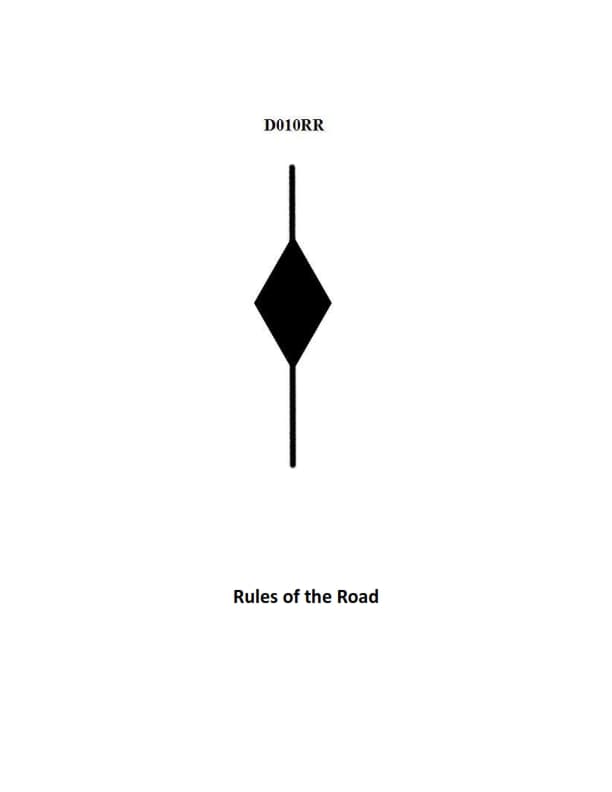
GLI02BOTH INTERNATIONAL & INLAND A vessel displaying the shape shown in illustration D010RR below is which of the following?
AI Explanation
The Correct Answer is C
**Explanation for Option C (Correct):**
The illustration D010RR depicts the dayshape signal for a vessel engaged in towing where the length of the tow, measured from the stern of the towing vessel to the aftermost part of the tow, **exceeds 200 meters**. The required dayshape for this condition is a **diamond shape** (or 'lozenge' shape). This signal is mandated by Rule 24(a)(i) of the International Regulations for Preventing Collisions at Sea (COLREGs) and applies universally (both internationally and inland).
**Explanation of Incorrect Options:**
**A) Is at anchor:** A vessel at anchor (if less than 50 meters in length) displays a single **black ball**. If 50 meters or more, it displays two black balls, one forward and one aft. A diamond shape is not the correct signal for anchoring.
**B) Is not under command:** A vessel not under command (NUC) displays two **black balls** in a vertical line where they can best be seen. A diamond shape is not the correct signal for being not under command.
**D) Has a tow that is carrying hazardous cargo:** There is no specific standard dayshape designated by COLREGs solely for a vessel with a tow carrying hazardous cargo. Vessels carrying dangerous goods may be required to display specific flag signals (e.g., Flag B or "Bravo") but not a black diamond dayshape. The diamond shape specifically relates to the length of the tow.
Related Questions
#30 A man aboard a vessel, is signaling by raising and lowering his outstretched arms to each side. What does
this signal indicate?#30 Your ship is entering port from sea, and you sight a pair of range lights. When in line, they bear 315° per
standard magnetic compass. The chart shows that the range bearing is 312°T, and that variation is 6°W. What
is the deviation of your compass at the time of the sighting?