Question 32
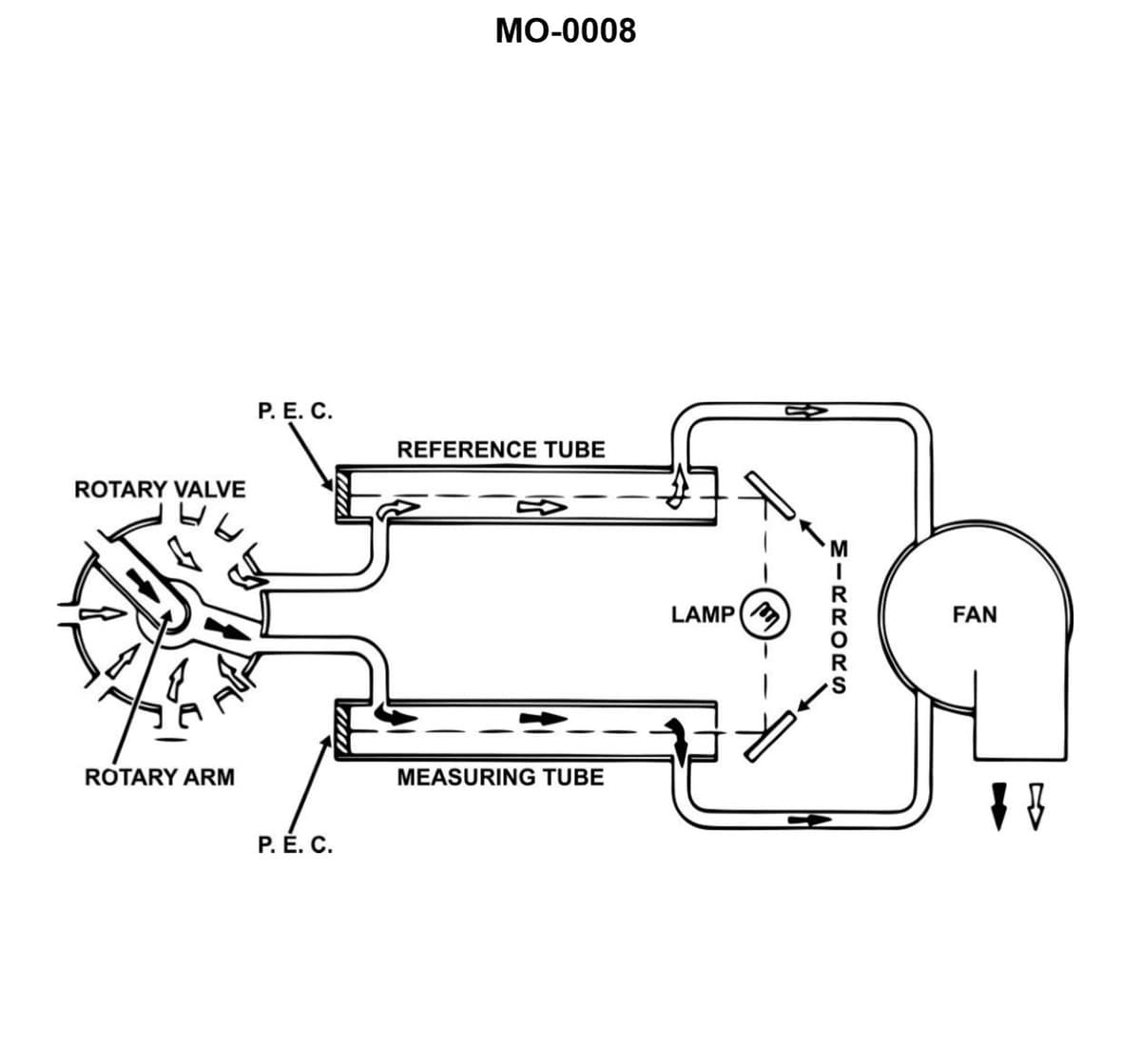
MODE01The device shown in the illustration is a __________. Illustration MO-0008
AI Explanation
The Correct Answer is B
**Why Option B is Correct:**
Option B describes a **comparator type mist detector for large low-speed, crosshead type engines**. The device illustrated (MO-0008, typically referring to an engine crankcase oil mist detector, such as a Graviner or similar design) is engineered to detect the presence of explosive oil mist within the crankcase of a diesel engine. This detection is crucial because an oil mist forms when a hot spot (like an overheated bearing or piston skirt) vaporizes lubricating oil; this mist, when mixed with air, is highly explosive. The comparator design works by drawing samples from multiple crankcase compartments and comparing the optical density of each sample to a clean reference sample (or to the sample from another, undamaged compartment). This type of continuous monitoring system is standard mandatory equipment for the crankcases of **large, slow-speed, marine diesel engines (crosshead type)** due to the significant volume of the crankcase and the catastrophic potential of a crankcase explosion.
**Why the Other Options Are Incorrect:**
* **A) photoelectric, explosive gas indicator, for use in high-speed, two-stroke, trunk type piston engines:** While the device uses photoelectric principles (detecting light scattering/obscuration), it measures **oil mist**, not general explosive gases (like methane or propane). Furthermore, while two-stroke engines can be trunk type, the mandatory, multi-point comparator system is primarily associated with the largest, slow-speed engines, not high-speed ones.
* **C) rotary type mist detector, designed for use in four-stroke, high-speed diesel engines:** The illustration typically depicts a fixed, manifold-based comparator unit, not a **rotary type** detector (which uses a spinning mechanism to sequentially sample gases). Additionally, large, slow-speed engines (crosshead) are typically two-stroke, not four-stroke. While oil mist detectors are used on all engines, the specific design shown is characteristic of the requirement for the largest marine engines.
* **D) level type explosimeter, for small medium-speed, trunk type piston engines:** The device is a continuous monitoring **oil mist detector**, not a simple "level type explosimeter" (which usually measures the Lower Explosive Limit, LEL, of generalized vapor). The device's complexity and multi-port design indicate use on large, compartmented crankcases, not small or medium-speed trunk type engines where simpler monitoring or alarms might suffice, or a different type of detector is employed.
Related Questions
#31 Why is it essential to introduce CO2 from a fixed fire extinguishing system, into a large engine room, as
quickly as possible?#31 A 'Proportional Only' controlled automatic process loop is oscillating continually, above and below the
setpoint. To stabilize this controller and loop using the 'gain' adjustment, what controller/loop response would
you expect upon process changes vs. setpoint?#33 Which of the following problems could develop due to the accumulation of oil vapors in the crankcase of a
diesel engine?