Question 32
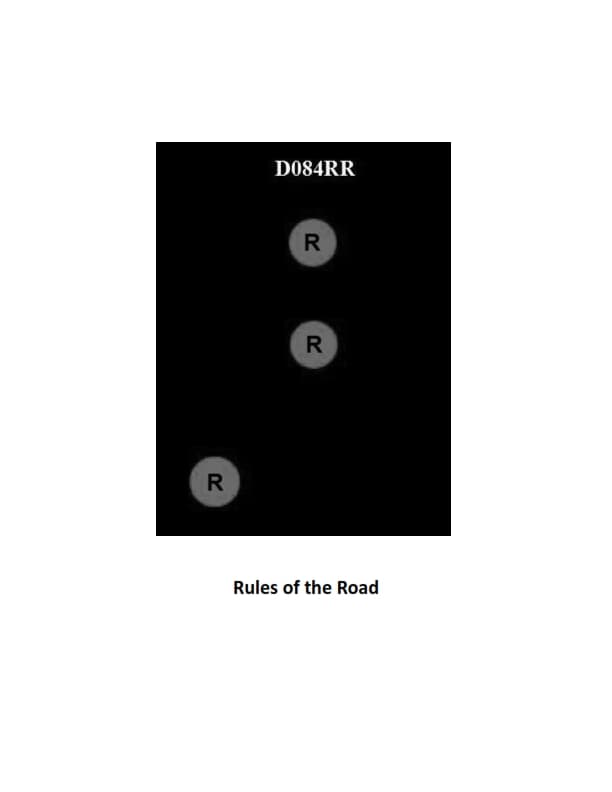
ONC01BOTH INTERNATIONAL & INLAND Which of the following describes a vessel exhibiting the lights shown in illustration D084RR below?
AI Explanation
The Correct Answer is A.
### Why Option A ("not under command") is Correct:
The illustration D084RR shows a vessel exhibiting two all-round red lights displayed vertically. According to both the International Regulations for Preventing Collisions at Sea (COLREGs, Rule 27(a)) and the Inland Rules (33 CFR § 83.27(a)), a vessel that is **not under command (NUC)** exhibits two all-round red lights in a vertical line where they can best be seen. These lights signify that the vessel is unable to maneuver as required by the rules and is therefore considered a privileged vessel in terms of obligation to keep out of the way of others (though all mariners must avoid collision).
### Why Other Options Are Incorrect:
* **B) showing improper lights:** While the display of lights is critical, the specific combination shown (two vertical all-round reds) precisely matches the prescribed signal for a vessel **not under command**. Thus, the lights are proper for that specific operational status, making this option incorrect.
* **C) dredging:** A vessel engaged in dredging or underwater operations (restricted in its ability to maneuver, Rule 27(d)) displays three all-round lights in a vertical line: Red-White-Red. It may also show two all-round green lights vertically to indicate the side on which an obstruction exists (safe side) and two all-round red lights vertically on the obstructed side. However, a vessel solely showing **two vertical all-round red lights** is defined as NUC, not dredging.
* **D) towing:** A vessel engaged in towing (Rule 24) displays masthead lights (two or three, depending on the length of the tow) and a yellow towing light above the stern light, but it does not display two all-round red lights vertically as its primary status lights. That configuration is reserved for NUC vessels.