Question 20
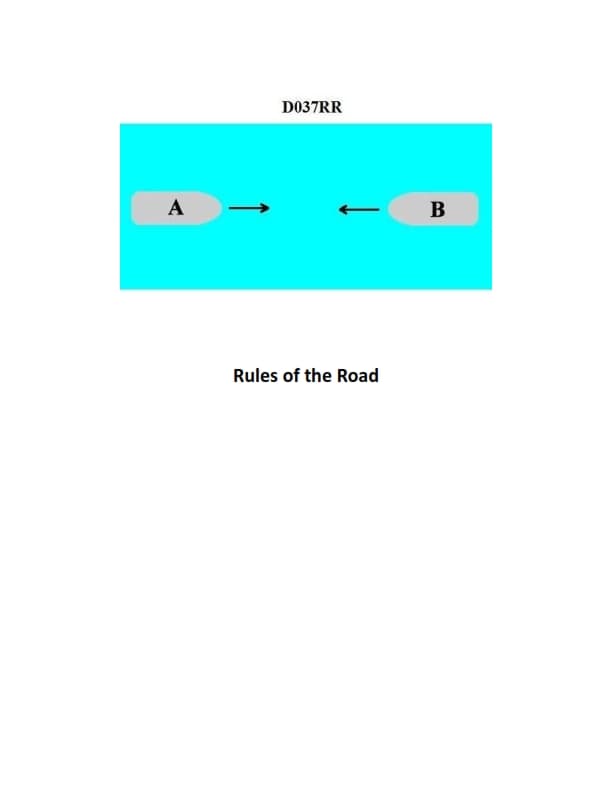
TV02BOTH INTERNATIONAL & INLAND You are on Vessel "A" engaged in fishing in a narrow channel as shown in illustration D037RR below. Vessel "B" is a tanker proceeding in the channel. Vessel "B" sounds five short and rapid blasts. What action should you take?
AI Explanation
The Correct Answer is D
**Explanation for Option D (Correct Answer):**
Option D, "not impede the passage of vessel 'B'", is the correct action based on Rule 9 (Narrow Channels) of both the International Regulations for Preventing Collisions at Sea (COLREGs) and the Inland Rules.
1. **Vessel B's status:** Vessel "B" is a tanker proceeding in a narrow channel. Rule 9(b) states that a vessel of less than 20 meters in length or a sailing vessel shall not impede the passage of a vessel that can safely navigate only within a narrow channel or fairway. Large commercial vessels like tankers are generally constrained by the channel.
2. **Vessel A's status:** Vessel "A" is engaged in fishing. Rule 9(c) specifically lists vessels engaged in fishing as vessels that *shall not impede the passage* of other vessels navigating within a narrow channel.
3. **Vessel B's signal:** Vessel "B" sounds five short and rapid blasts. This is the danger/doubt signal (Rule 34(d)). In this scenario, Vessel B is signaling doubt or concern that Vessel A (the fishing vessel) is impeding its safe passage.
4. **Action required:** As a fishing vessel required by Rule 9 to not impede the passage of the large vessel in the narrow channel, Vessel "A" must take immediate action to ensure Vessel "B" can proceed safely.
**Explanation of Incorrect Options:**
* **A) maintain course and speed:** This is incorrect. Vessel A is required by Rule 9(c) not to impede Vessel B. Maintaining course and speed directly contributes to impeding Vessel B, especially after Vessel B has sounded the danger signal.
* **B) not answer the whistle signals from vessel "B":** This is incorrect. Although the five short blasts is not a maneuvering signal requiring a specific *answer* (like the one or two blast signals), ignoring the danger signal and the underlying obligation not to impede traffic would be a clear violation of safe navigation practice and the COLREGs/Inland Rules.
* **C) sound one prolonged followed by two short blasts:** This signal (Rule 35(c)) indicates a vessel *towing* in conditions of restricted visibility (Inland Rules only). This signal is entirely inappropriate for Vessel A (a fishing vessel) in this clear visibility, maneuvering situation, and would create confusion.