Question 43
TV03INLAND ONLY Two power-driven vessels are meeting in the situation as shown in illustration D037RR below and will pass within 1/2 mile of each other. What does two short blasts from either vessel mean?
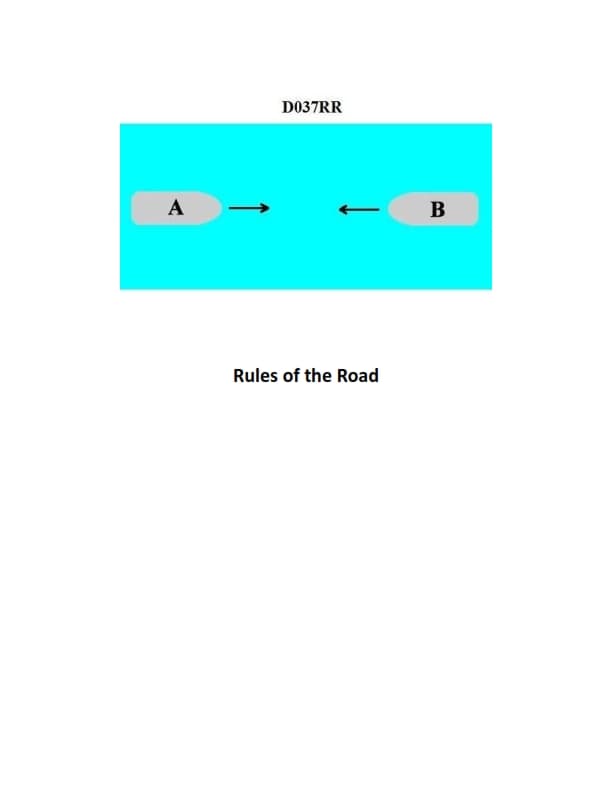
AI Explanation
The Correct Answer is B
**Explanation for B (Correct Answer):**
Option B, "I intend to leave you on my starboard side," is the correct interpretation for two short blasts given by a power-driven vessel when meeting another vessel in U.S. Inland waters. Under the Inland Navigation Rules (Rule 34(a)(i)), when vessels are in sight of one another:
* **One short blast** signifies: "I intend to leave you on my port side" (equivalent to altering course to starboard).
* **Two short blasts** signify: "I intend to leave you on my starboard side" (equivalent to altering course to port).
* **Three short blasts** signify: "I am operating astern propulsion."
The phrase "I intend to leave you on my starboard side" precisely communicates the maneuver initiated by the vessel sounding the signal.
**Explanation of Incorrect Options:**
* **A) "I am altering my course to port."** While altering course to port is the action a vessel takes when intending to leave the other vessel on its starboard side, Inland Rules require the signal to state the *intent relative to the passing vessel* ("I intend to leave you on my starboard side") rather than just the course alteration.
* **C) "I intend to leave you on my port side."** This signal is communicated by **one short blast**, not two.
* **D) "I am altering my course to starboard."** This signal would result in the vessel intending to leave the other vessel on its port side and is communicated by **one short blast**, not two.