Question 432Electricity/Electronics - Assistant Engineer70% to pass
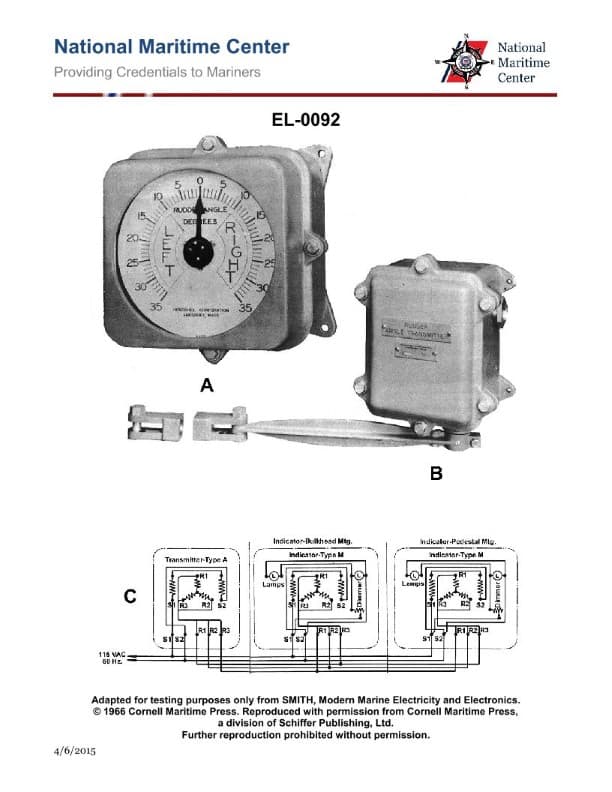
In actual applications, electrical connections associated with 'R1, R2 and R3' of the transmitter to 'R1, R2, and R3' of the indicators shown in figure "C" of the illustration are made by what means? Illustration EL-0092
AI Explanation
The correct answer is C) slip rings and brushes.
Slip rings and brushes are used to make the electrical connections between the transmitter and the indicators in the illustration, as this allows for the continuous, uninterrupted transmission of the signal while the components are rotating. This is a common method for connecting electrical circuits on rotating machinery, as it avoids the need for fixed, rigid connections that could be damaged by the rotation.
The other answer choices are not correct because: A) soldered contacts would not withstand the rotation, B) spliced and taped connections would not be robust enough, and D) solderless crimp-on connectors would not provide a reliable connection for a rotating system.
Related Questions
#430 Referring to the illustration of possible brush holder mounting configurations, which figure is the correct method of configuring the brush holders on a DC generator? Illustration EL-0057 #431 If a DC generator was disassembled during overhaul, it is important that the brush holder rigging be installed in the neutral plane. On larger machines, if the brush rigging and end bells are not match-marked, what is the correct procedure for determining the neutral setting using factory marks? #433 If coil 'R1-R2-R3' on the transmitter in figure "C" shown in the illustration is turned 30 degrees clockwise, how will the corresponding coils 'R1-R2-R3' on the receivers (indicators) respond? Illustration EL-0092 #434 What does figure "C" of the illustration represent? Illustration EL-0092 #435 An electrical component is connected across a 120 volt 60 hertz AC supply. What is the current drawn by the component if the impedance is 200 ohms?